
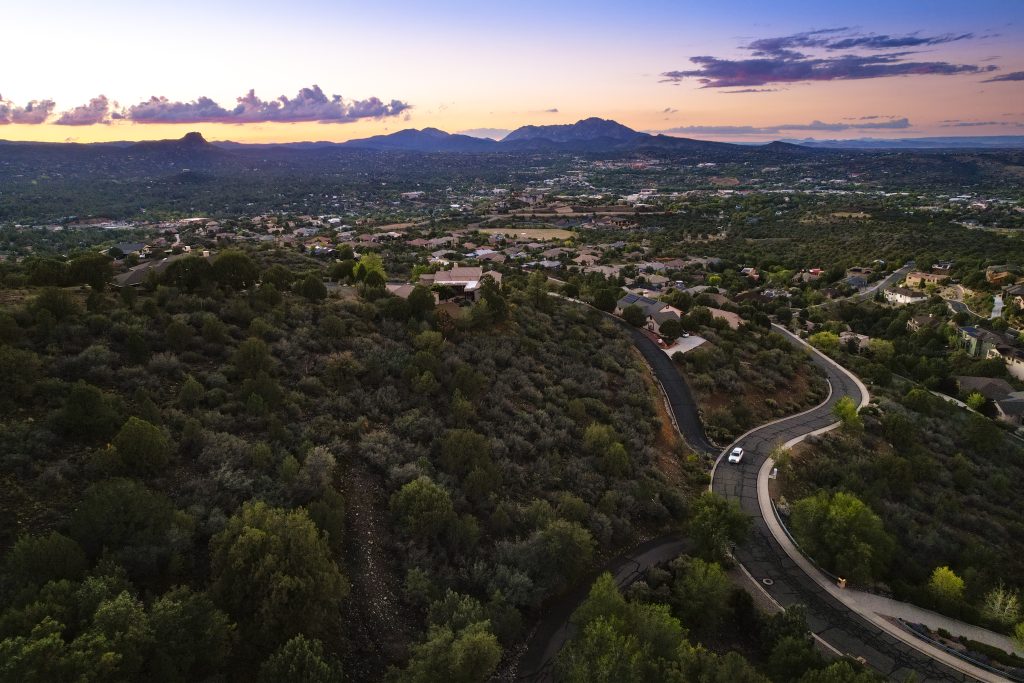
If you’re researching a move to Northern Arizona, there’s a good chance Prescott has already caught your attention. With four distinct seasons, mountain scenery, miles of trails, a historic downtown and a strong sense of community, Prescott offers a side of Arizona that can surprise people who have only experienced the desert.
Whether you’re moving from another state or simply making the move north from the Phoenix area, here are some of the most important things to know about living in Prescott.
You Really Do Get Four Seasons
One of the first things people notice about Prescott is the weather.
At an elevation of roughly 5,300 feet, Prescott has a much different climate than lower-elevation areas like Phoenix. Summers are generally milder, fall brings cooler temperatures and changing leaves, and winter can even bring snow.
Spring and summer are great times to take advantage of the area’s trails, lakes and outdoor spaces, while cooler fall and winter weather gives Prescott a completely different feel throughout the year.
For people who love Arizona but are ready for cooler temperatures and more seasonal variety, Prescott offers an appealing middle ground.
Prescott and Prescott Valley Are Different
If you’re new to the area, this can be a little confusing at first. Prescott and Prescott Valley are two separate communities located next to one another, and both are worth considering when you’re deciding where to live.
Prescott is known for its historic downtown, Whiskey Row, pine trees, granite boulders and established neighborhoods. Prescott Valley has grown significantly over the years and offers newer neighborhoods, shopping, restaurants, parks and other amenities.
Together, they’re part of the larger Quad Cities area along with Chino Valley and Dewey-Humboldt.
When you’re house hunting, don’t be afraid to explore beyond one city. Depending on what you’re looking for, you may find that one area fits your lifestyle better than another.
Outdoor Recreation Is Everywhere
Living in Prescott makes it pretty easy to spend more time outside.
The area is surrounded by trails for hiking and mountain biking, along with lakes for kayaking, fishing and spending a day near the water. Watson Lake is probably the most recognizable, with its granite formations and blue water, but it’s far from the only place to explore.
You’ll also find Lynx Lake, Goldwater Lake, Willow Lake and miles of trails throughout the surrounding Prescott National Forest.
And you don’t always have to drive across town to enjoy them. Many Prescott-area neighborhoods are located close to trails, open space and recreation.
Downtown Prescott Is a Big Part of the Community
At the center of Prescott is the historic Courthouse Plaza, surrounded by restaurants, shops, local businesses and the famous Whiskey Row.
But downtown isn’t just somewhere to take visitors.
Throughout the year, the Courthouse Plaza hosts community events, markets, live music, parades and seasonal celebrations. During the holidays, the courthouse lights have become one of Prescott’s best-known traditions.
It’s one of the things that gives Prescott its smaller-town character even as the area continues to grow.
Getting Around Is Pretty Simple
Prescott is much smaller than a major metropolitan area, so getting from one side of town to another is generally straightforward.
Most residents rely on a car for everyday transportation, especially if they regularly travel between Prescott and Prescott Valley. You’ll quickly become familiar with major roads like Highway 69, Highway 89 and Willow Creek Road.
If you’re relocating, it’s worth driving around the area before choosing a neighborhood. Consider how close you want to be to downtown, shopping, healthcare, outdoor recreation and the places you’ll visit regularly.
What About Shopping and Everyday Essentials?
You don’t have to give up everyday conveniences to live in a mountain town.
Prescott and Prescott Valley have grocery stores, major retailers, restaurants, local shops, fitness centers and other everyday services throughout the area. Prescott Valley also has a growing commercial corridor that serves much of the surrounding region.
For larger-city amenities, Phoenix is also accessible by car, making trips to the Valley possible when needed.
Healthcare Is an Important Part of the Area
If access to healthcare is part of your relocation decision, the Prescott area has an established healthcare network serving the Quad Cities.
Dignity Health Yavapai Regional Medical Center operates hospital campuses in Prescott and Prescott Valley, along with a range of medical practices and specialty services throughout the area.
When comparing neighborhoods, it can be helpful to look at proximity to your preferred healthcare providers just as you would shopping, recreation and other everyday needs.
There’s More Than One Type of Neighborhood
One of the benefits of exploring Prescott is seeing how much the landscape can change within a relatively short drive.
Some neighborhoods are surrounded by tall pines. Others sit among Prescott’s signature granite boulders. You’ll also find communities with expansive mountain views, more open high-desert landscapes, golf courses, trails and resort-style amenities.
That variety means choosing where to live isn’t simply about finding a house you like. It’s also about deciding what you want to see when you walk outside every morning.
At Mandalay Homes, our Prescott-area communities reflect several of these different settings.
The Preserve at Prescott offers a more private setting tucked among Prescott’s natural granite landscape.
The Dells combines dramatic boulder formations, trails and views with convenient access to the rest of Prescott.
Hidden Hills offers another distinctly Prescott setting surrounded by natural landscape.
And in nearby Prescott Valley, Jasper provides access to trails and the JClub, with amenities including pools, fitness, pickleball and more.
What Should You Look for in a Prescott Home?
The home itself matters just as much as the neighborhood, especially in a climate with warm summer days, freezing winter nights and plenty of sunshine throughout the year.
When comparing homes, it’s worth looking beyond countertops, flooring and finishes.
Ask about insulation, windows, air sealing, heating and cooling equipment, indoor air quality and energy efficiency. These features can affect how comfortable the home feels throughout Prescott’s changing seasons as well as how much energy it takes to maintain that comfort.
Newer homes may also offer features and building practices that weren’t commonly available when many of Prescott’s older homes were constructed.
A Few Things to Do Before You Move
If you have the opportunity, spend a few days exploring Prescott before deciding where you want to live.
Don’t just visit the tourist destinations. Drive through neighborhoods. Grab groceries. Explore Prescott Valley. Walk around downtown on a normal weekday. Visit some trails. See how long it takes to get from the neighborhoods you’re considering to the places you’ll use regularly.
Making Prescott Home
There are plenty of reasons people are drawn to Prescott, but much of its appeal comes down to the combination of things you get in one place.
You can spend the morning hiking among granite boulders, grab lunch downtown, head home to a quiet neighborhood and still have the conveniences you need nearby. Add in four seasons, mountain views, community events and easy access to outdoor recreation, and it’s easy to understand why so many people consider relocating here.
If you’re thinking about making Prescott or Prescott Valley home, we’d love to help you explore the area.
Explore Mandalay Homes communities and available homes throughout Prescott and Prescott Valley, or contact our team to learn more about finding the right community for you.
