
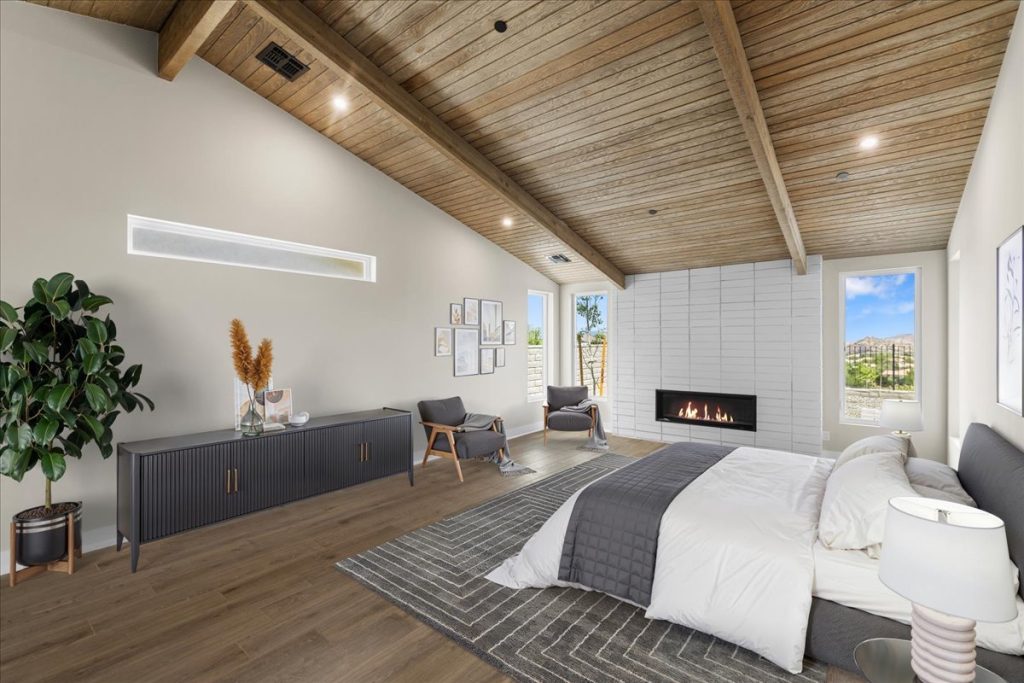
When you’re looking for a new home, most of your attention naturally goes to the things you can see. You notice the kitchen, flooring, countertops, floor plan and finishes.
But there’s a lot going on behind the walls that deserves just as much attention.
Insulation, windows, air sealing, ventilation and HVAC equipment aren’t necessarily the most exciting things to look at in a model home, but they all play a role in how comfortable your home is and how much energy it takes to keep it that way.
Here are a few things worth knowing when comparing homes.
Start With the HERS Score
You’ve probably seen a HERS score mentioned when looking at energy-efficient homes, but what does it actually tell you?
HERS stands for Home Energy Rating System. It’s an industry-standard system used to measure a home’s energy performance. In general, the lower the score, the more energy efficient the home.
An average new home has a HERS score around 72. Mandalay Homes offers homes with significantly lower HERS scores, depending on the home and performance package.
It’s a helpful number to know because it gives buyers another way to compare homes beyond price, size and finishes.
Insulation Makes a Big Difference in Arizona
Anyone who has spent a summer in Arizona knows how hard an air conditioner has to work.
Good insulation helps make that job easier.
Mandalay uses features such as spray-foam insulation to help slow heat transfer between the outdoors and your living space. Foundation insulation can also help reduce the amount of heat transferred through the ground and into the home.
Then there’s air sealing.
Even small gaps throughout a house allow conditioned air to escape and outside air to enter. Mandalay uses AeroBarrier technology to help seal those small openings and create a tighter building envelope.
Put simply, the goal is to keep the air you’re paying to cool inside your home.
Don’t Forget About the Attic
The attic probably isn’t high on your list of things to see when touring a new home, but it’s worth thinking about.
Traditional attics can get extremely hot during the summer. If HVAC equipment and ductwork are sitting in that environment, the system has to overcome those conditions while trying to cool the rest of the house.
A conditioned attic changes that.
By insulating and conditioning the attic space, the HVAC equipment isn’t operating in the same extreme environment. This can help the system work more efficiently while also contributing to more consistent temperatures throughout the home.
Windows Matter, Too
Arizona homes get a lot of sun, so windows are another important part of the equation.
Low-E windows have a special coating designed to reduce the amount of heat that passes through the glass. You still get the natural light you want without allowing as much unwanted heat into the house.
It’s one of those features you may never really notice and that’s kind of the point. It’s discreetly doing its job every day.
A Tighter Home Still Needs Fresh Air
If we’re sealing a home to prevent unwanted air from getting in and out, how does fresh air get inside?
It gets brought in intentionally.
High-performance homes can use continuous ventilation and filtration systems to bring fresh outdoor air into the home in a controlled way. An Energy Recovery Ventilator, or ERV, can exchange indoor and outdoor air while helping limit the energy loss that would otherwise come with that exchange.
Mandalay homes can also include air purification features, and our homes incorporate indoor air-quality standards designed to make the indoor environment more comfortable.
Planning for What’s Next
Another thing worth considering when buying a new home is what you might want five or ten years from now.
Maybe you don’t own an electric vehicle today. Maybe solar or battery storage isn’t something you’re ready for yet.
Having the home pre-wired for an EV charger, solar and battery storage can make adding those technologies later much easier. Some Mandalay home-performance options take that a step further with solar systems and energy storage already included.
It’s a small detail during construction that can become a pretty useful feature down the road.
So, What Should You Ask When Shopping for a Home?
There’s nothing wrong with getting excited about a great kitchen or finding the perfect floor plan. That’s part of the fun of buying a new home.
Just remember to ask about the parts you can’t see, too.
What’s the HERS score? How is the home insulated? How well is it air sealed? How does fresh air get into the house? What kind of HVAC system does it have? Is it ready for an EV charger, solar or battery storage?
The answers can tell you a lot about what it will actually be like to live in the home.
